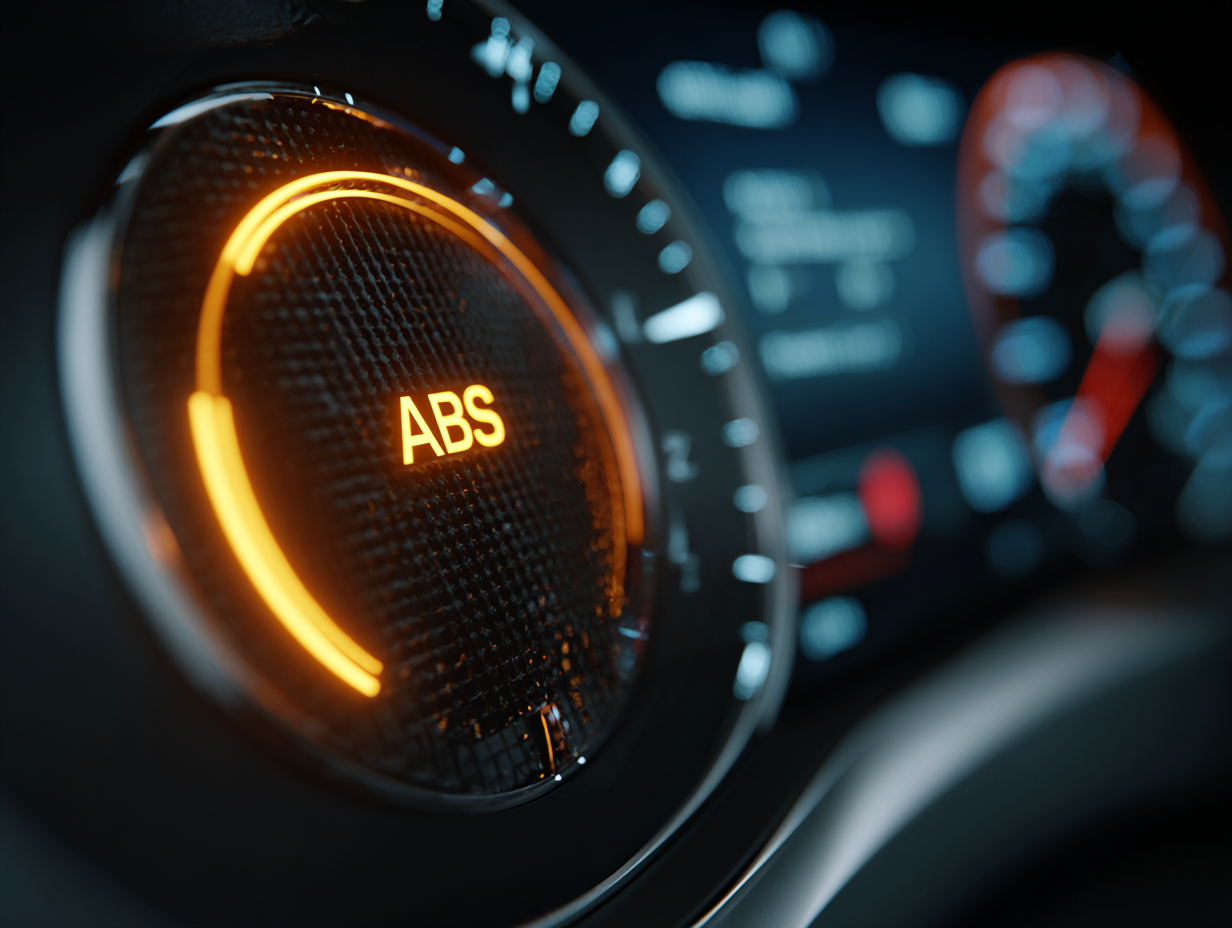
There’s a special kind of anxiety that comes when a dashboard light suddenly appears. But out of all the glowing icons that can pop up, the ABS light has a way of instantly tightening your grip on the steering wheel. You’re still moving fine, the brakes work… so what’s the big deal?
That little orange light isn’t just there to scare you. It’s your car’s way of saying, “Hey, your safety backup just clocked out.” And while your brakes might still feel normal for now, the ABS system, short for Anti-lock Braking System, plays a huge role in keeping your car steady during sudden stops or slippery roads.
Think of ABS as your car’s guardian angel during emergencies. When you slam the brakes on wet pavement or gravel, your wheels naturally want to lock up. Without ABS, that lockup means skidding and losing control.
The ABS system prevents that by quickly pulsing the brakes, keeping the wheels turning just enough for you to steer safely. You might have felt it before: that rapid vibration in the brake pedal when you stop hard. That’s ABS working in real time to keep you on track.
So, when the ABS light turns on, it means that the system isn’t ready to help you anymore.
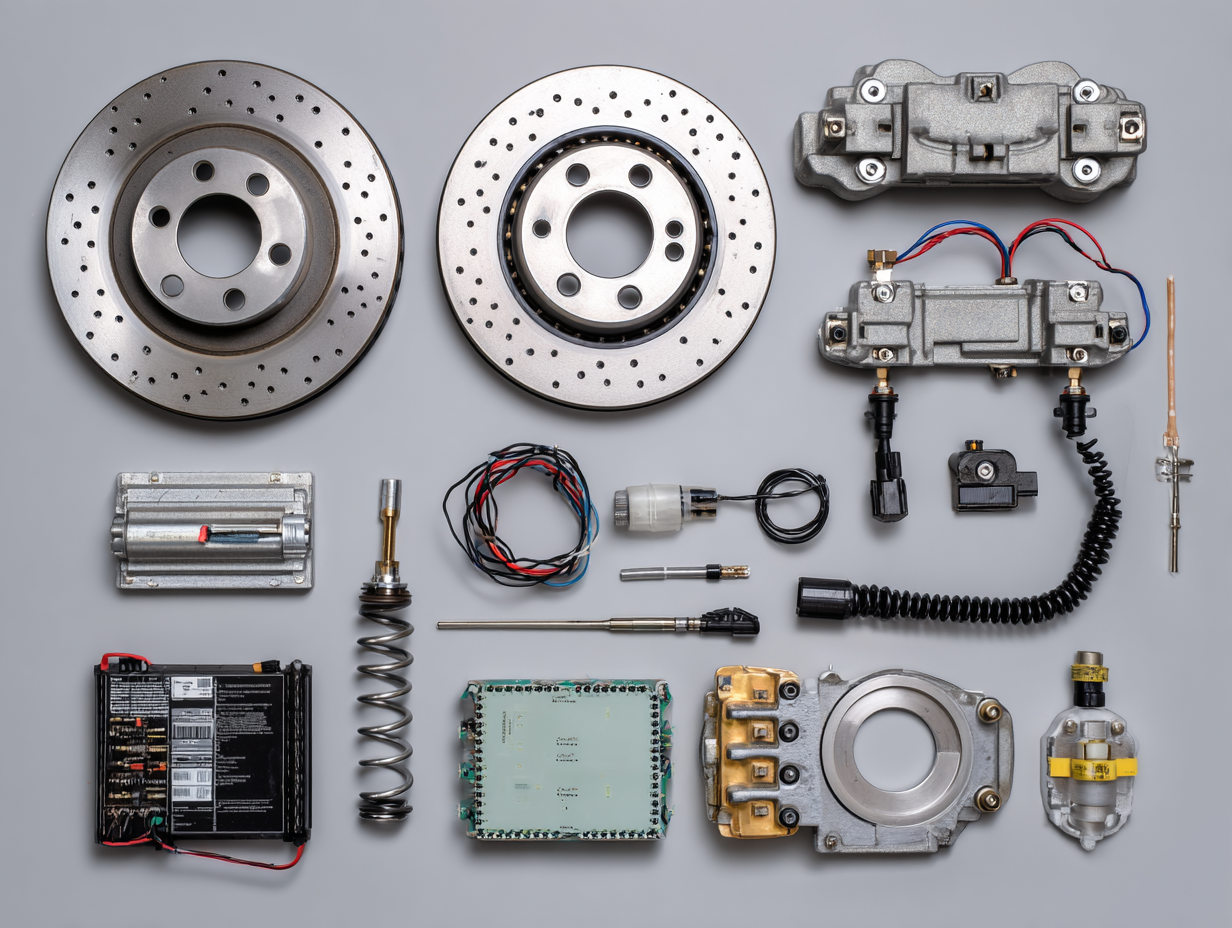
There are a few usual suspects behind that warning:
The tricky part? Your normal brakes still work fine at first, so it’s easy to ignore the light. But in a split-second emergency, that missing safety net could make all the difference.
First, don’t panic. Your car is still drivable, but proceed with extra caution, especially on wet or slippery roads. Check your brake fluid level; if it’s low, top it up and see if the light turns off. If it stays on, it’s time for a diagnostic scan.
Modern cars store fault codes that reveal exactly which part of the system is acting up. It’s a quick process for any technician, and catching it early can save you from bigger, costlier repairs later.
The ABS light doesn’t mean your car is about to stop working, but it’s not something to shrug off either. It’s your car’s way of saying, “I’ve lost one of my best safety tools.”
So, if that light has been glaring at you from the dashboard lately, don’t just wait for it to go away. Contact the Lebanese Europe team of experts and let them get your braking system back to its full strength — before you need it most.
The rich text element allows you to create and format headings, paragraphs, blockquotes, images, and video all in one place instead of having to add and format them individually. Just double-click and easily create content.
A rich text element can be used with static or dynamic content. For static content, just drop it into any page and begin editing. For dynamic content, add a rich text field to any collection and then connect a rich text element to that field in the settings panel. Voila!